Fanvil IP Phones in Saudi Arabia: Building a Modern Voice and Queue Stack in 2026
Clear, reliable voice communication still runs the heart of every serious business. Yet many offices in Riyadh and Jeddah still cling to aging analog lines that drop calls and cost too much. In 2026, the smarter path is a unified voice stack built around Fanvil IP Phones in Saudi Arabia and a connected queue platform.
This article explains how modern VoIP hardware works, why Fanvil devices stand out, and how to tie voice into visitor flow. Everything here comes from hands-on deployment experience, not spec-sheet copying.
The Shift From Analog to IP Voice
Traditional phone lines charge per line and scale poorly. IP telephony sends voice over your existing data network instead, which slashes call costs and unlocks powerful features.
With a hosted or on-premise PBX, you gain call routing, voicemail-to-email, call recording, and rich reporting. Adding a new extension takes minutes, not days.
To anchor a professional voice deployment, teams across the Kingdom rely on Fanvil IP Phones in Saudi Arabia for crisp audio and enterprise-grade durability.
Why Fanvil Earns a Spot on the Desk
- High-definition audio with noise suppression for busy offices.
- Wide model range, from lobby phones to executive color-screen units.
- Native SIP support that works with most PBX platforms.
- Power-over-Ethernet, so one cable handles data and power.
Matching the Right Fanvil Model to Each Role
Not every employee needs the same handset. A receptionist has different needs than a warehouse supervisor. Use the guide below to plan your fleet.
| Role | Recommended Type | Key Feature |
|---|---|---|
| Reception / front desk | Mid-range color IP phone | Busy lamp field, quick transfer |
| Call center agent | Headset-ready entry model | All-day comfort, EHS support |
| Executive office | Premium color-screen phone | Gigabit ports, Bluetooth |
| Warehouse / common area | Rugged or wall-mount unit | Loud ringer, durable build |
| Meeting room | Conference IP phone | 360° microphone pickup |
Connecting Voice to Visitor Flow
Great voice hardware solves half the customer experience. The other half happens when people walk through your door.
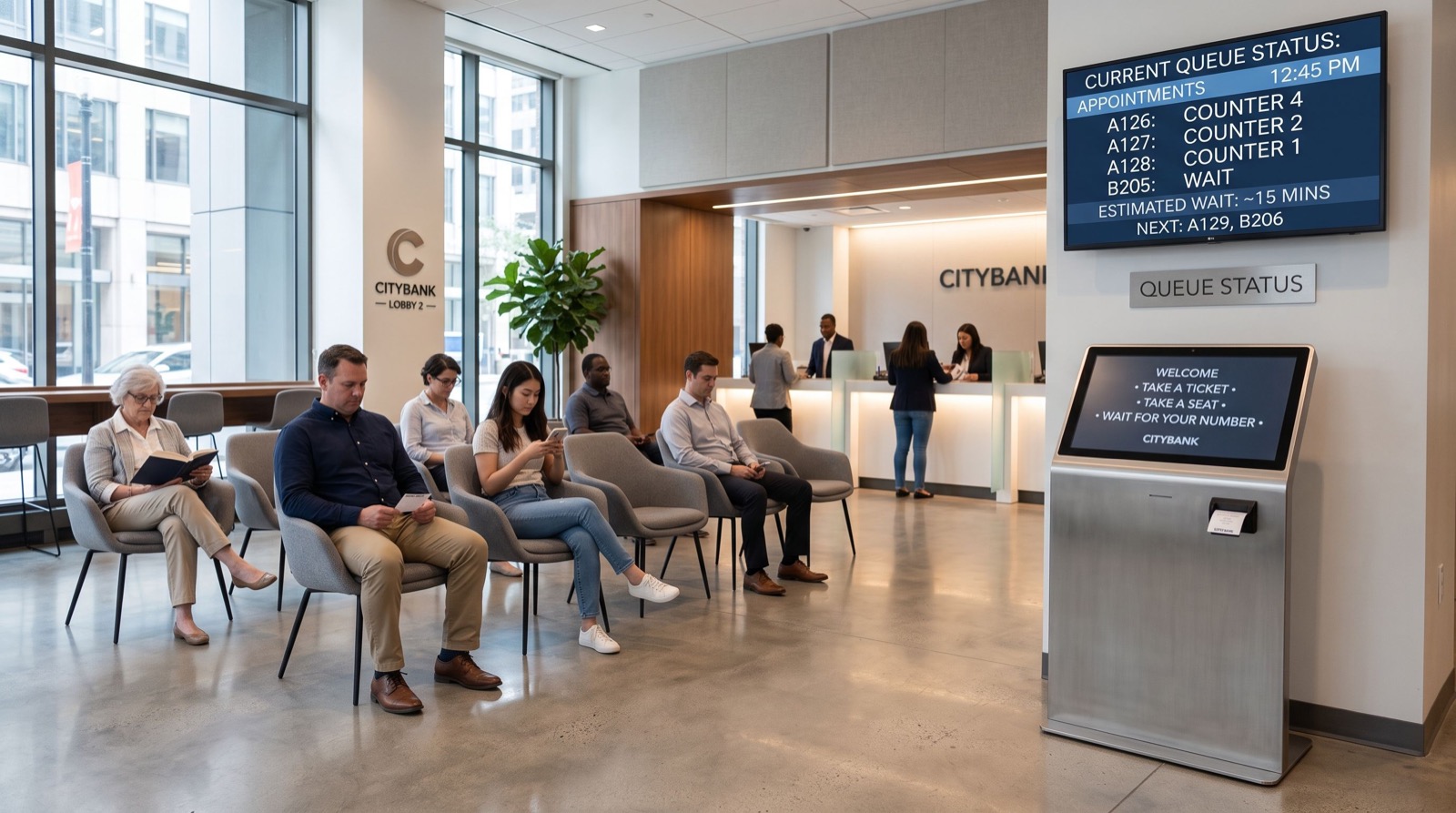
That is where a smart queue platform matters. Pairing your VoIP stack with a queue management system in saudi arabia lets agents call the next visitor by number while phone lines stay organized in the same dashboard.
Imagine a bank branch where the phone system and the ticket system share one reporting view. Managers finally see both call wait times and floor wait times together. That single view drives smarter staffing decisions every hour.
Network Foundations You Cannot Skip
Voice quality lives and dies on your network. Before you deploy a single handset, prepare the ground.
- Provision QoS. Prioritize voice traffic so calls stay crisp under load.
- Deploy PoE switches. Feed power and data through one clean cable run.
- Segment with VLANs. Keep voice traffic separate from heavy data traffic.
- Secure SIP. Use strong passwords and firewalls to block toll fraud.
- Test bandwidth. Confirm your uplink handles peak concurrent calls.
One practical field tip: always run a small pilot with five to ten phones first. Verify audio quality during your busiest hour, then roll out to the full team with confidence.
Security and Standards in 2026
VoIP systems face real threats, from eavesdropping to fraudulent call routing. Encryption and disciplined configuration protect both your data and your bill.
Follow recognized guidance when you harden the system. The National Institute of Standards and Technology publishes practical security frameworks that apply well to voice-over-IP deployments and network segmentation.
For businesses that want turnkey installation and ongoing support, working with reliable local experts shortens the path from purchase to a fully working, secure phone system.
Cost and Return on Investment
IP telephony usually pays for itself faster than owners expect. Line rental savings alone often cover the hardware within the first year.
- Lower monthly telecom bills through internet-based calling.
- Free or cheap internal calls between branches and remote staff.
- Reduced hardware maintenance versus legacy analog systems.
- Better analytics that reveal where to trim wasted time.
Features That Set Modern Handsets Apart
Today’s IP phones do far more than dial numbers. The right feature set lifts productivity across every department.
Programmable keys let staff transfer, park, and pick up calls with a single press. Presence indicators show who is free, busy, or away, so internal calls land the first time. Built-in directories put every contact at the agent’s fingertips.
Feature Highlights Worth Prioritizing
- Busy lamp field for instant colleague status.
- Call parking and pickup groups for smooth handoffs.
- Local phonebook plus central LDAP directory access.
- EHS headset support for hands-free call center work.
- Dual gigabit ports so the PC shares one cable.
Scaling Voice Across Multiple Branches
Growth multiplies communication complexity. A well-designed IP stack absorbs that growth without the pain of legacy lines.
Because extensions live in software, a new branch joins the same dial plan almost instantly. Staff call each other by short internal numbers, no matter the city, at little or no cost.
Centralized management is the quiet hero here. IT teams push firmware, security patches, and configuration changes to hundreds of phones from one console. That control keeps every site consistent, secure, and easy to support.
Remote and hybrid staff plug in from home with the same extension and features. The office follows the employee, which matters more than ever in 2026’s flexible work culture.
Frequently Asked Questions
Are Fanvil IP phones in Saudi Arabia compatible with any PBX?
Yes. Fanvil handsets use the open SIP standard, so they work with most hosted and on-premise PBX platforms, including popular open-source and commercial systems.
Do I need new cabling to switch to VoIP?
In most cases, no. If you already run structured Ethernet cabling with PoE switches, you can reuse it. Older sites may need a switch upgrade for power delivery.
Can voice and queue systems share one dashboard?
They can. When integrated, managers view call metrics and visitor wait times together, which makes staffing and service decisions far more accurate.
How do I keep my VoIP system secure?
Use strong SIP passwords, enable encryption, segment voice on its own VLAN, and place a firewall in front of the PBX. Regular firmware updates close known gaps.
Final Thoughts
A modern voice stack built on Fanvil IP phones in Saudi Arabia gives your team clear audio, lower costs, and room to grow. Tie that stack to a smart queue platform, and you unify voice and visitor flow under one measurable roof. Start small, secure the network, and scale the setup that proves itself. In 2026, unified communication is the practical edge that keeps customers happy and staff productive.